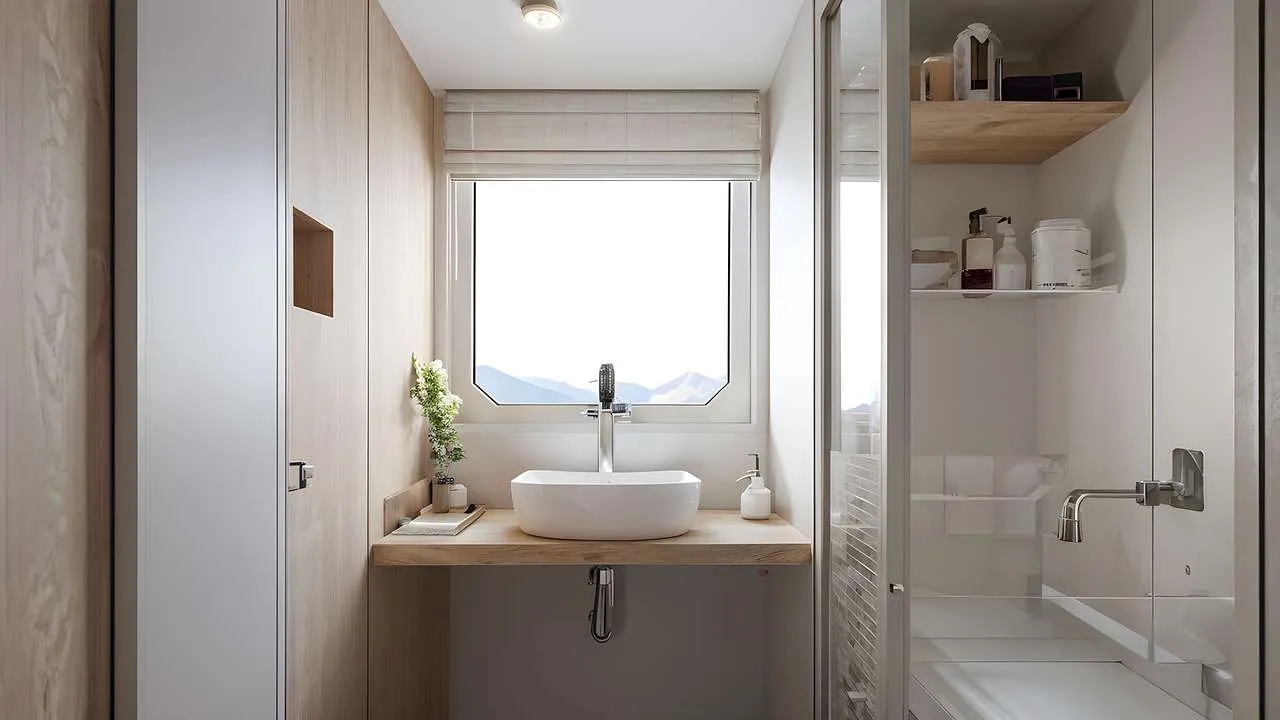
In the realm of home design, small bathroom ideas are not just about making a room look bigger—you want a functional, comfortable space that ages well. With the right planning, you can transform a compact bathroom into a calm, efficient retreat. Here is a guided approach developed from professional design principles to help you maximize every inch.
Smart layout principles for small bathrooms
Maximize vertical space
Install tall, slim storage units or open shelves that reach toward the ceiling. A wall-mounted mirror with integrated cabinets adds storage without stealing floor space. Vertical towel rails and recessed lighting draw the eye upward, making the room feel more open.
Choose space-saving fixtures
Consider a wall-hung vanity or a floating vanity with a shallow depth to free floor area. A compact, one-piece toilet or a wall-hung model can reclaim precious floor space. For showers, opt for a curved or neo-angle enclosure rather than a bulky square unit.
Door swing and circulation
If possible, use a pocket door or a sliding door to avoid door clearance issues. Sliding doors remove the risk of door intrusion into the toilet or shower zones, which is critical in a tight layout.
Fixtures and storage ideas
Vanities and sinks
Two strong options are a wall-mounted vanity with an integrated sink or a streamlined floating vanity. Choose drawers or pull-outs over shelves to keep small items organized. A pedestal sink can work in the smallest spaces but sacrifices storage—balance needs and habits.
Toilet and shower options
For toilets, wall-hung models visually expand the space and simplify cleaning. In showers, a clear-glass enclosure with a single-hinged door and recessed niches reduces visual bulk. A 32–36 inch shower is typically the sweet spot for many layouts.
Built-in storage and niches
Recessed niches in the shower and above the toilet provide essential storage without protruding into the room. Add a mirrored medicine cabinet for quick touch-ups and to reflect light across the space.
Materials, color, and lighting
Light, reflective surfaces make small bathrooms feel larger. Use large-format tiles with minimal grout lines, light neutrals or soft pastels, and a high-gloss or satin finish on cabinetry. Frameless glass shower doors and well-placed LED lighting—especially above mirrors—reduce shadows and enhance depth.
Storage solutions that work
Smart storage is the backbone of small-bathroom design. Inside vanity drawers, use dividers or pull-out organizers. Over-the-door organizers can hold toiletries, while magnetic strips or hooks on the inside of cabinets keep metal grooming tools accessible without clutter.
Budget and quality signals
Plan in phases if needed. Start with essential plumbing and enclosure upgrades, then add storage and finishes. Look for durable, moisture-resistant materials, and prioritize items with solid warranties. Durable countertops, low-maintenance surfaces, and easy-to-clean hardware save time in a small space.
Comparison of common vanity options
| Vanity Type | Pros | Cons | Best For |
|---|---|---|---|
| Wall-mounted vanity with sink | Free floor space, easy cleaning, modern look | Requires wall support and plumbing tweaks | Medium to small baths needing storage without bulk |
| Floating vanity | Very open footprint, customizable height | Limited deep storage, can be pricey | Narrow layouts with contemporary style |
| Corner vanity | Excellent for tight corners, maximizes corner usage | Small drawers, limited surface area | Very small baths or awkward corners |
| Pedestal or compact vanity | Ultra-slim profile, low cost | No built-in storage, limited counter space | Preteen powder rooms or guest bathrooms |
Conclusion
Conclusion, by combining smart layout choices, compact fixtures, practical storage, and thoughtful finishes you can craft a small bathroom that feels larger, functions better, and remains stylish for years. Start with priorities, test layouts, and choose durable materials that resist humidity. The right mix of light, neutrals, and reflective surfaces will help you achieve a breathable, comfortable space without sacrificing functionality.
Summary, small bathrooms thrive on smart layout, compact fixtures, clever storage, light palettes, and durable materials. Implement the ideas above to maximize space, enhance usability, and achieve a cohesive design.